
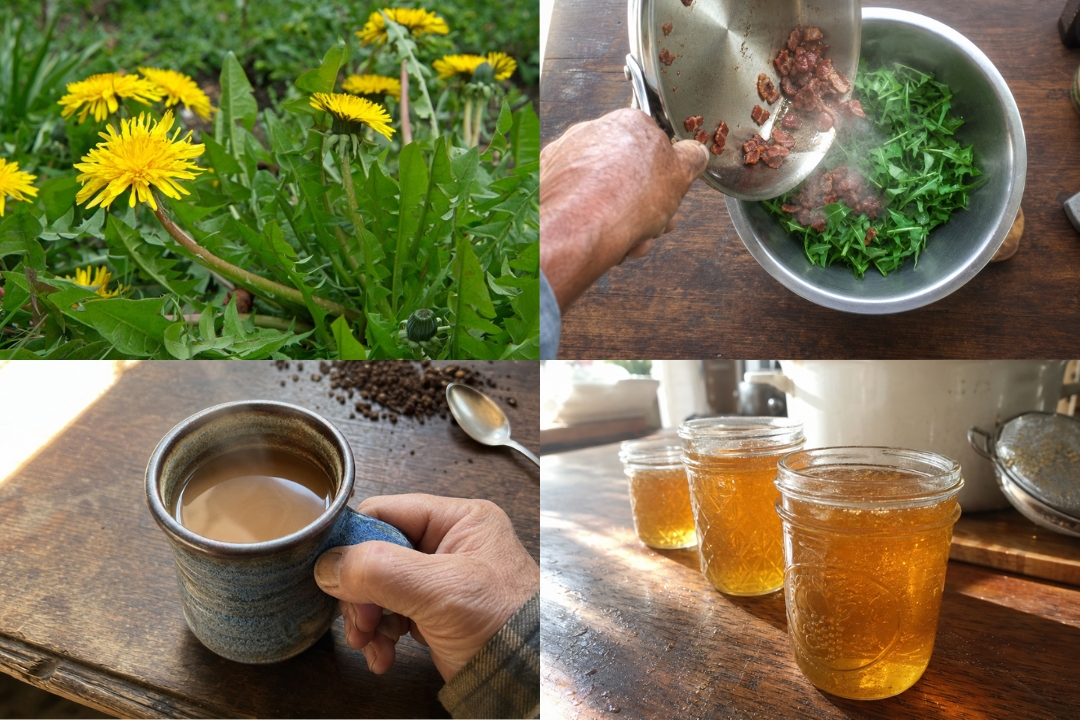
Every Part of This Weed Is Food
Colonial records place it in New England dooryards by 1672, and it didn’t get there by accident. Someone packed the seed on purpose, wedged in among the onion sets and pea seed, on a ship where cargo space meant the difference between a family eating that first winter or not. That plant is growing in your yard right now. You’ve mowed it, sprayed it, and muttered at it more times than you can count, and the whole time it’s been exactly what those settlers crossed an ocean to bring with them: food and medicine, root to flower, for free.
Dandelion wasn’t foraged by accident either, not by the people who first planted it here. It was cultivated on purpose in kitchen gardens up and down the colonies, right next to the carrots, because a garden without it felt incomplete. Somewhere in the last hundred years, we decided a uniform green lawn mattered more than a plant that fed and healed the people who came before us. The dandelion never changed. We just stopped paying attention.
Before You Pick a Single Leaf, Remember This
Here’s the one rule that separates a good harvest from a genuinely bad idea: only pick dandelion from ground you know for certain hasn’t been sprayed. Your own untreated lawn, a neighbor’s yard you can vouch for, or a wild patch well clear of roadsides and golf courses. Dandelion’s taproot runs deep and pulls up whatever the soil is holding onto, herbicide included. A plant hit with broadleaf weed killer three seasons ago can still be carrying it. Skip it.
Identification, at least, asks nothing hard of you. True dandelion (Taraxacum officinale) grows as a low rosette of deeply jagged leaves rising straight from the soil, topped by a single hollow, leafless stem and one bright yellow flower head. Snap a stem or a leaf and white, milky sap beads up almost instantly. That sap is the giveaway. A couple of lookalikes exist, catsear and hawksbit both flower yellow, but neither one bleeds that same milky latex from a smooth hollow stem, so once you know to check, you won’t mistake it.
More Vitamin A Than Spinach, and Nobody Put It on a Label
Here’s the number that should embarrass every bag of baby spinach in the produce aisle: 100 grams of raw dandelion greens carries roughly 10,000 micrograms of vitamin A as retinol activity equivalents. Spinach, in that same 100 grams, gives you around 469. Dandelion isn’t a little ahead here. It’s carrying more than twenty times the vitamin A of the vegetable everyone assumes is unbeatable. It edges out spinach on calcium too, 187 milligrams against roughly 99, and holds a solid iron count of just over 3 milligrams per 100 grams, on top of a serious dose of vitamin K, vitamin C, potassium, and inulin, a prebiotic fiber that feeds the good bacteria living in your gut.
None of this would have surprised the herbalists who came before us. Long before “nutrient-dense” was a phrase anyone used, they called dandelion a spring tonic, the plant you turned to after a winter of salted meat and root cellar vegetables, when your body was starving for something green and alive. That instinct wasn’t folklore dressed up as medicine. The bitter compounds in dandelion leaves hit your tongue and trigger a genuine physiological response, stimulating bile flow and digestive secretions on contact. Your ancestors couldn’t name the mechanism. They just knew that eating this plant in spring made them feel better, and it turns out they were right for reasons a lab could actually explain.
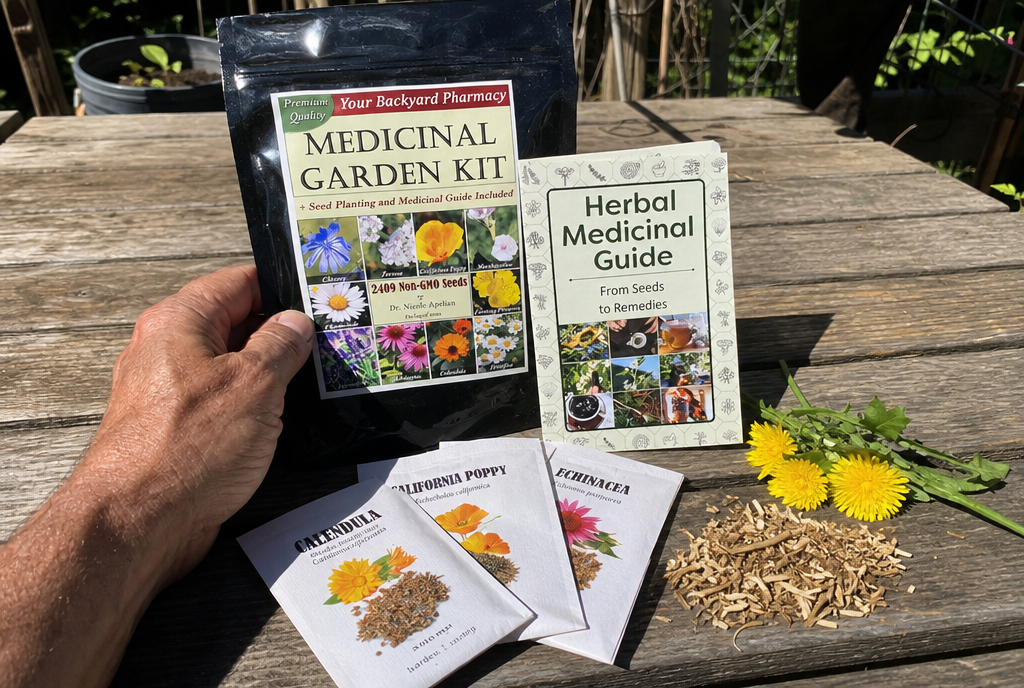
If you want to take that same instinct further, building a medicinal garden of your own turns dandelion from an occasional yard find into one piece of a full apothecary you can walk out your back door and use anytime.
Recipe One: Dandelion Greens, Done Two Ways
Timing matters more with dandelion greens than almost any other wild edible. Young spring leaves, picked before the plant sends up a flower stalk, are mild and only lightly bitter. Once the plant flowers, the leaves turn noticeably sharper. That’s not spoiled, just stronger, and it just means you treat them differently in the kitchen.
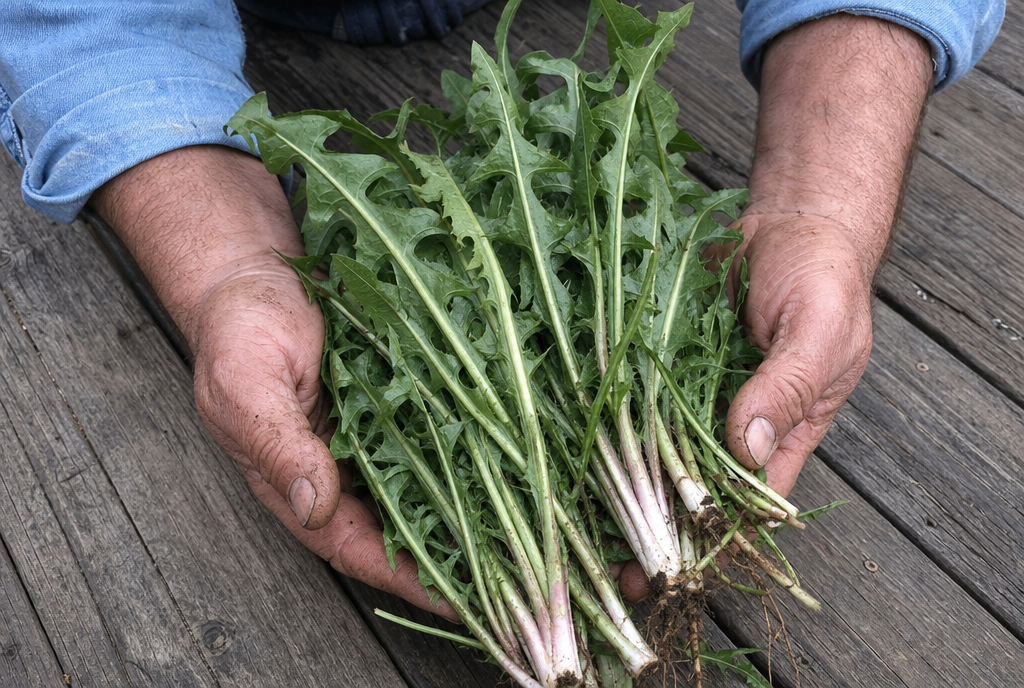
Method one: the raw spring salad. Pick young leaves 3 to 5 inches long. Wash thoroughly in cold water (dandelion grows close to soil, so grit hides in the leaf ridges) and spin dry. Tear into bite-size pieces. This is where the traditional wilted dressing comes in, a technique carried by German and Pennsylvania Dutch settlers that’s still the best way to serve dandelion greens today:
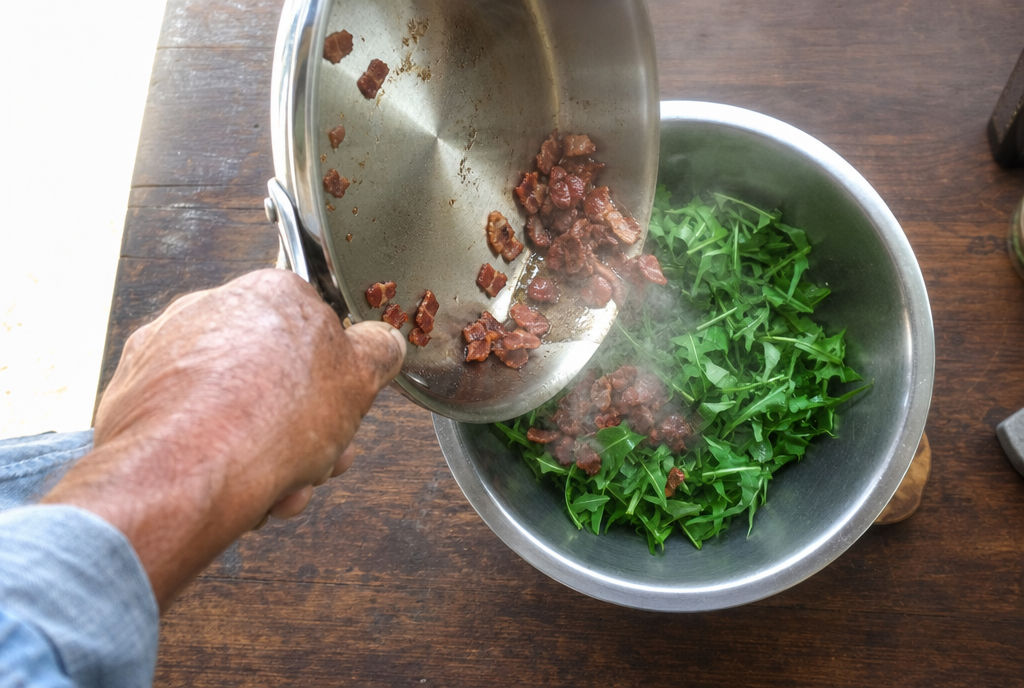
- 6 cups young dandelion greens, torn
- 4 slices bacon, diced
- 2 tablespoons apple cider vinegar
- 1 teaspoon sugar
- 1 hard-boiled egg, sliced (optional, but traditional)
- Salt and black pepper to taste
Fry the bacon in a skillet until crisp, then remove it with a slotted spoon and set aside, leaving the rendered fat in the pan. Off the heat, whisk the vinegar and sugar directly into the hot bacon fat. Pour this warm dressing over the greens immediately and toss. The heat wilts the greens just slightly and takes the bitter edge off without cooking them through. Top with the crumbled bacon and egg slices. This dish alone converts more dandelion skeptics than any other single recipe.

Method two: cooked greens for later-season or flowering-stage leaves. Once leaves get more assertive, blanch them for 60 to 90 seconds in boiling water, then shock in ice water. This single step pulls out most of the bitterness. Drain well, then sauté in olive oil or bacon fat with a couple of minced garlic cloves and a pinch of red pepper flakes until just tender, 3 to 4 minutes. Finish with a squeeze of lemon. Treat them exactly like you would collard or mustard greens, because nutritionally and culinarily, they’re in the same family of tough, mineral-dense cooking greens, just free and self-seeding.
Either way, harvest generously. A single dandelion plant regrows leaves continuously through the growing season, so picking greens doesn’t kill the plant. It’s closer to mowing than harvesting, and if you’re building broader food security into your property, that renewable, low-effort yield is worth understanding alongside other ways to preserve food without refrigeration, since dandelion greens also dry well for winter storage in soups and stews.
Recipe Two: Dandelion Flower Jelly
This is the recipe that surprises people most, because dandelion flowers turn into something that tastes remarkably close to honey, with a light floral note that’s genuinely delicious on biscuits or toast. The trick to good dandelion jelly is entirely in the prep work: you want the yellow petals only, with none of the green sepal base attached, because that green part carries almost all the bitterness.
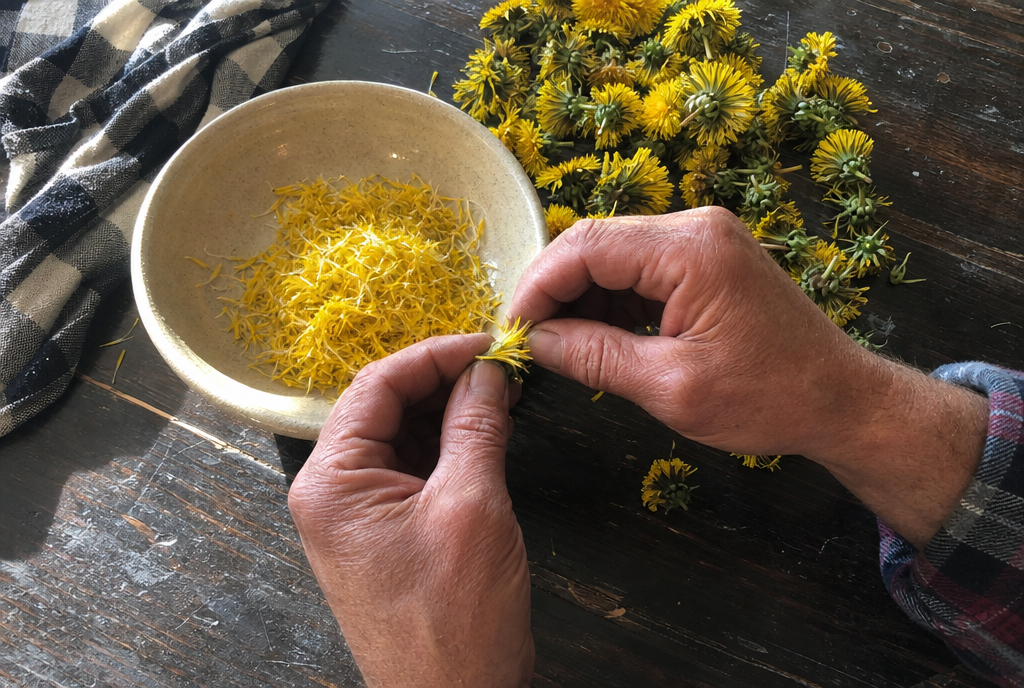
Harvesting and prepping the flowers:
Pick fully open dandelion flowers on a dry, sunny morning, once the dew has burned off, when the flavor is strongest. You’ll need about 4 cups of packed flower heads to yield roughly 2 cups of petals.
To separate the petals from the bitter green base, hold each flower head by the green sepals and pull the yellow petals off with your fingers, or use kitchen scissors to snip just above the green collar. It’s fussy work, plan on 30 to 40 minutes for a batch, but it’s the difference between jelly that tastes like sunshine and jelly that tastes like a lawn.
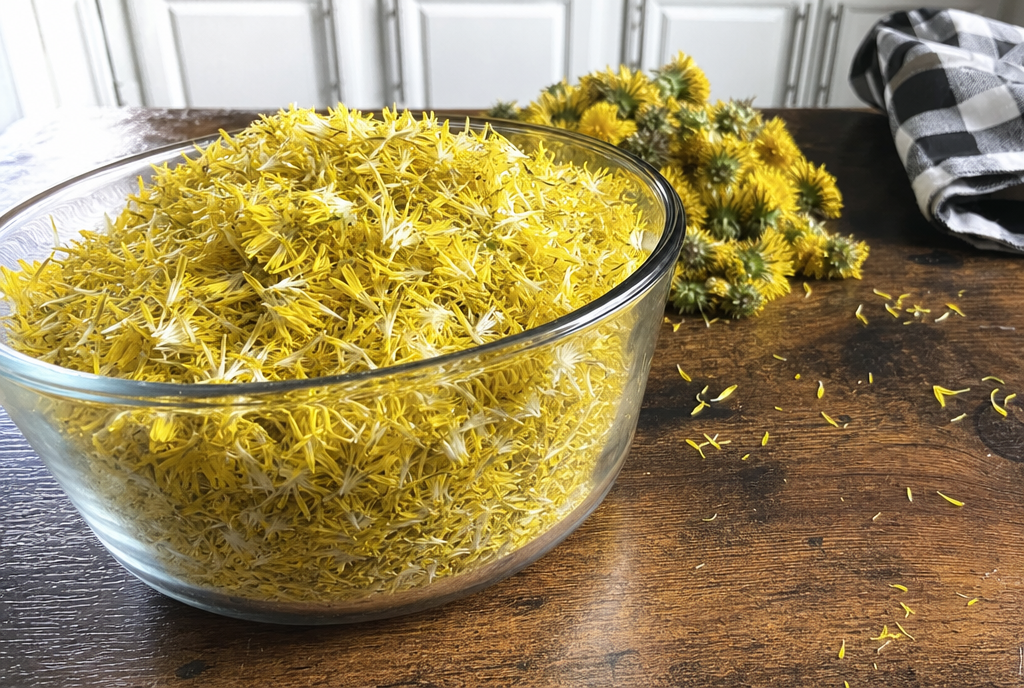
Dandelion Flower Jelly
- 2 cups dandelion petals (green parts removed)
- 4 cups boiling water
- 1/4 cup lemon juice
- 1 package (1.75 oz) powdered pectin
- 4 cups granulated sugar
Steps:
- Place the petals in a heatproof bowl and pour the boiling water over them. Cover and let steep for at least 4 hours, or overnight in the refrigerator, to pull out the color and flavor.
- Strain the liquid through a fine mesh strainer or cheesecloth, pressing gently on the petals to extract all the liquid. You should have about 3 1/2 cups of golden “dandelion tea.” Discard the petals.
- Pour the tea into a large pot with the lemon juice. Whisk in the powdered pectin and bring to a rolling boil over high heat, stirring constantly.
- Add the sugar all at once, return to a full rolling boil that can’t be stirred down, and boil hard for exactly 1 minute.
- Remove from heat, skim any foam, and ladle immediately into sterilized half-pint jars, leaving 1/4 inch headspace. Process in a boiling water bath for 10 minutes to seal for shelf storage, or simply refrigerate and use within 3 weeks.
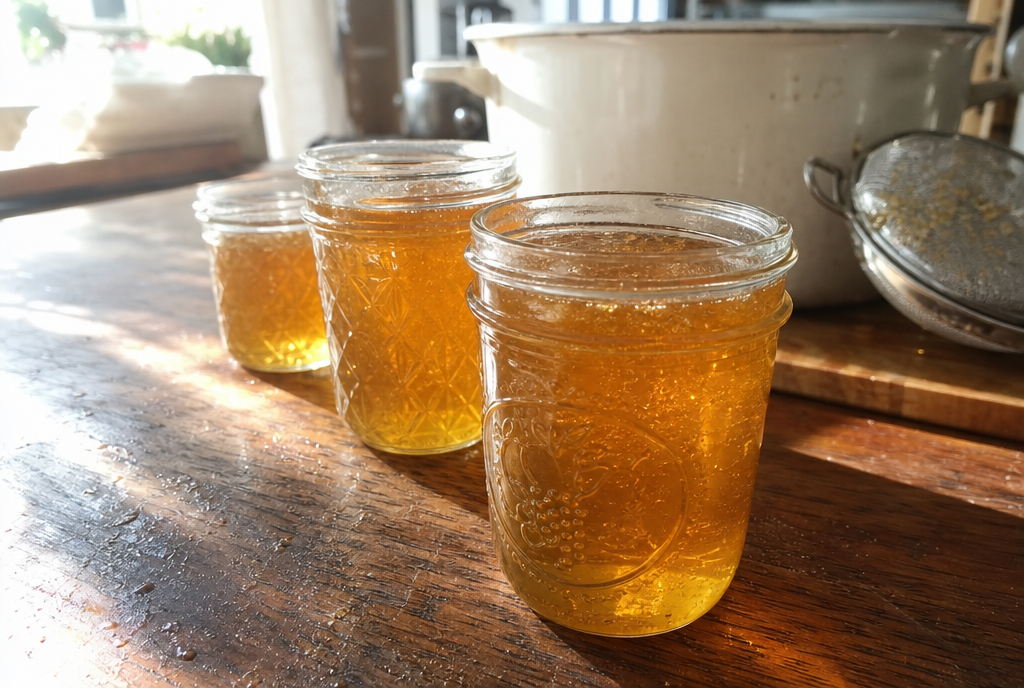
The color alone, a deep amber gold, tells you something worth noticing: this jelly is essentially bottled dandelion flower, all of that vitamin and antioxidant content concentrated into something shelf-stable. It’s also one of the easiest ways to introduce dandelion to kids or skeptical family members, since the flavor reads as “unusual honey” rather than “backyard weed.”
If dandelion wine interests you beyond jelly, the process runs parallel: steeped petals fermented with sugar, yeast, and citrus over several weeks into a light, honeyed country wine that pioneer households made every spring the flowers came in. It’s a longer project than jelly, but it draws on the exact same petal-harvesting technique above.
Recipe Three: Roasted Dandelion Root Coffee
The root might be the single most valuable part of the plant, and it’s the one modern foragers skip most often, probably because it takes more patience than picking a leaf. But roasted dandelion root coffee has one of the best-documented histories of any wild food in North America. Susanna Moodie, writing about pioneer life in Canada in her 1852 memoir Roughing It in the Bush, included her own method for preparing it. Newspaper accounts from the early 1900s describe it as a common, inexpensive substitute for real coffee. And it saw a real resurgence during the Great Depression and again during wartime rationing, when imported coffee beans were expensive or simply unavailable and a caffeine-free brew from a free backyard root filled the gap at breakfast tables across the country.
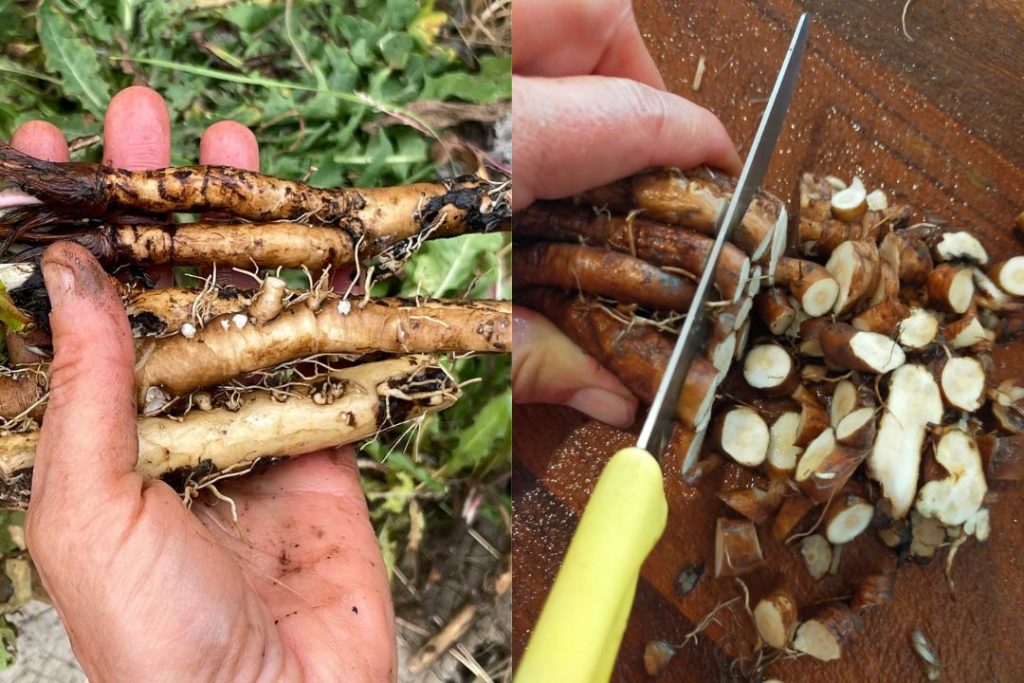
Harvesting the root:
Dig roots from plants at least two years old, ideally in early spring before flowering or in fall after the first frost, when the root has stored the most energy and tastes sweetest. Look for a taproot roughly 1/2 inch thick, pale like a small carrot, running straight down. A garden fork or narrow trowel driven in a few inches out from the base helps you lever the whole root out without snapping it.
Processing:
- Scrub the roots clean under running water, using a vegetable brush to get into the grooves. Trim off the crown and any thin fibrous side roots.
- Slice the roots lengthwise into thin strips, about the thickness of a pencil, to speed drying.
- Spread the strips on a rack or baking sheet in a single layer and let them air-dry somewhere warm for 1 to 2 weeks, or use a dehydrator at 95 to 115°F until they snap cleanly rather than bend. They should be completely dry with no moisture remaining, or they’ll mold in storage.
Roasting:
Spread the fully dried root pieces on a baking sheet and roast at 300°F, stirring every 10 minutes, for 45 to 60 minutes total. You’re looking for a deep, even chocolate-brown color, not black, and a nutty, faintly bittersweet aroma that genuinely does resemble coffee roasting. Pull them a shade lighter than you think you want, since they continue to darken slightly as they cool.
Grinding and brewing:
Once cooled, grind the roasted root in a coffee grinder or with a mortar and pestle to a coarse, coffee-ground consistency. Store it in an airtight jar out of light, where it keeps for months.
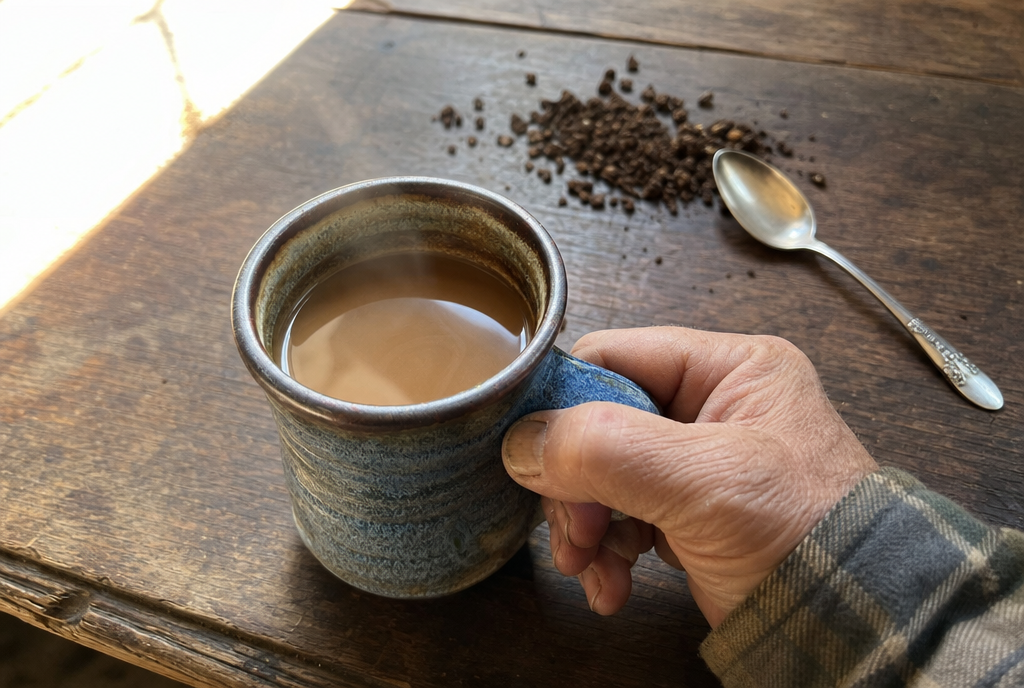
To brew, use about 1 to 2 teaspoons of ground roasted root per cup of water. Unlike real coffee, this benefits from simmering rather than just steeping: add the grounds directly to water in a small saucepan, bring to a low simmer, and let it cook for 10 to 15 minutes to fully extract the flavor, then strain through a fine mesh strainer or French press. It comes out earthy and slightly sweet, closer to a light roast than to bold black coffee, and it takes cream and sugar exactly the way regular coffee does. It’s also completely caffeine-free, which is precisely why it became the go-to substitute when real coffee ran short, and why it still appeals to anyone cutting back on caffeine today.
This is a recipe worth taking seriously as a genuine pantry staple, not a novelty. If building out a reliable stock of foods your family can rely on when the store shelves look thin matters to you, roasted dandelion root belongs on the same list as the other long-shelf-life foods worth stockpiling, right alongside the dried beans and grains, because it stores for a year or more and costs you nothing but a shovel and some patience.
The Digestive Tonic Old Herbalists Swore By
Beyond the recipes, dandelion root has a long, well-documented history as a bitter digestive and liver tonic, distinct from the roasted coffee preparation above. Unroasted, dried root steeped as a tea, or preserved in alcohol as a tincture, delivers those bitter compounds in a more concentrated form, which is the version herbalists reached for specifically to stimulate bile flow and ease sluggish digestion after heavy meals. If you’re interested in building tinctures and preparations like this from plants you grow or forage yourself, learning to make remedies from your own medicinal garden is the natural next step once you’ve gotten comfortable with roots and greens.
Cautions Worth Taking Seriously
Dandelion earns its reputation as one of the safest wild edibles out there, but “safe” doesn’t mean “safe for everyone.” A few real cautions:
- Asteraceae allergy: Dandelion belongs to the daisy family, along with ragweed, chrysanthemums, and chamomile. If you’re allergic to any of those, patch-test before eating dandelion in quantity.
- Gallbladder disease or gallstones: Dandelion stimulates bile flow, which is exactly the wrong thing if you have a bile duct obstruction or active gallstones. Skip it if this applies to you.
- Blood thinners: The vitamin K content in the greens can interact with warfarin and similar medications. Talk to your doctor before making dandelion greens a dietary staple if you’re on one.
- Diuretic medications and kidney conditions: Dandelion has a mild natural diuretic effect. Combined with prescription diuretics, this can push fluid and electrolyte loss further than intended.
None of this means avoid the plant. It means treat it with the same basic respect you’d give any potent food or herb, and check with a doctor if you fall into one of the categories above.
A Plant That Never Stopped Being Useful
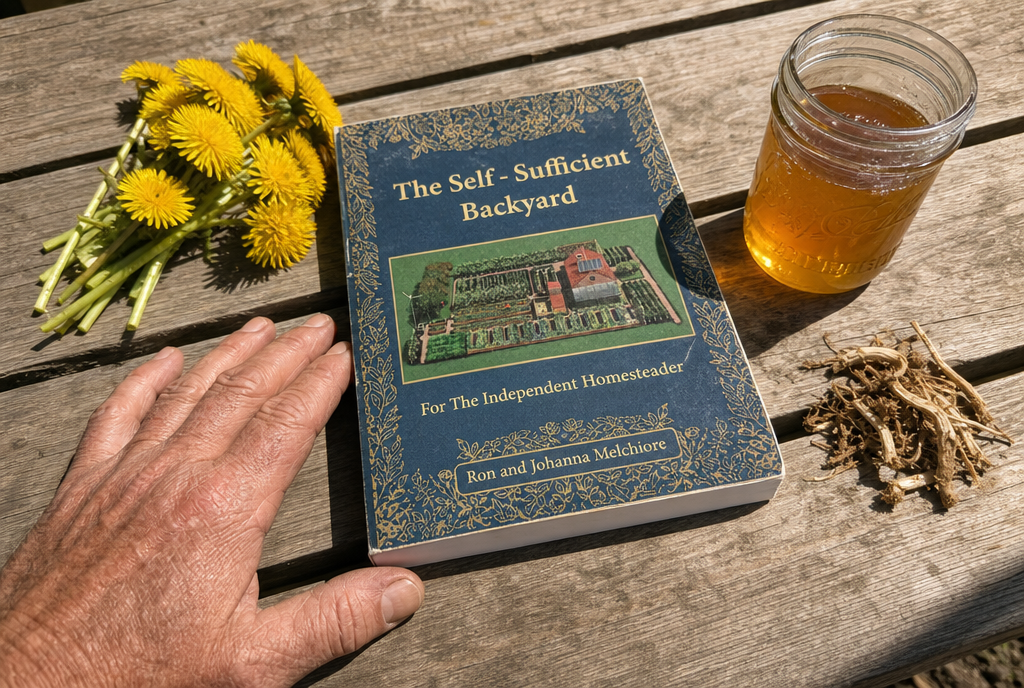
The uses above only cover greens, jelly, and coffee, and dandelion still has more to give: the unopened flower buds can be pickled into a caper substitute, the same buds fried into fritters, and honestly, none of it should feel that surprising anymore. This was never really a weed. It was a crop that fell out of fashion, carried across an ocean on purpose by people who understood exactly what it was worth, and then slowly forgotten by a culture that decided a uniform green lawn mattered more than free food and medicine.
Your yard has been quietly growing something valuable this whole time. The only thing that changed is whether you know it. And once you start seeing dandelion this way, it tends to open up a bigger question: what else is growing in your yard right now that you’ve been mowing down without a second look? Skills like this one, the kind that turn an ordinary backyard into a working source of food and medicine, are exactly what building a genuinely self-sufficient backyard is about, and dandelion is as good a place to start as any.
I grew up eating dandelion greens. The Jelly and “coffee” were very interesting..