

Slippery Elm: The Pioneer Bark That Heals Your Gut
There’s a tree standing quietly in the hardwood forests of the eastern United States that once kept entire frontier settlements alive through bitter winters and brutal illness, without a pharmacy in sight. Settlers didn’t have antacids, proton pump inhibitors, or prescription medications for gut inflammation. What they did have was knowledge: passed down from Native American healers, carved into the earliest American medical texts, and trusted enough to earn a spot in the U.S. Pharmacopeia for 140 years.
That tree is the slippery elm (Ulmus rubra), and if you’re serious about self-reliance and natural preparedness, understanding this plant isn’t optional, it’s foundational.
Whether you’re stocking a homestead apothecary, building out your SHTF medical kit, or simply looking for a time-tested, evidence-backed alternative to modern gut remedies, slippery elm deserves a permanent place in your knowledge base.
What Is Slippery Elm? Know Your Tree Before You Need It
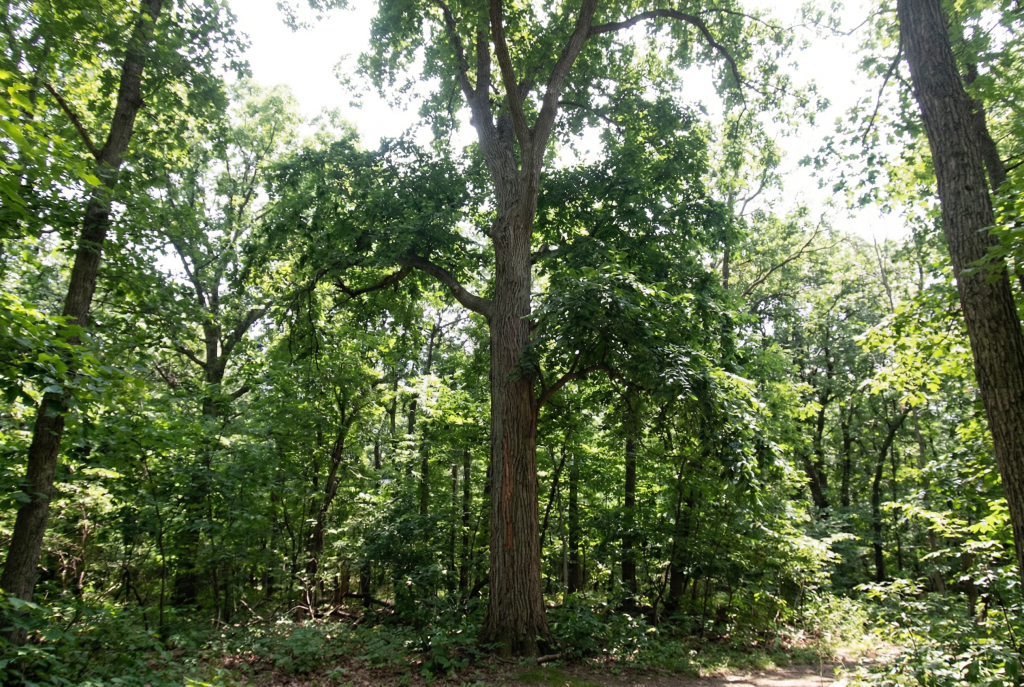
Before you can use a plant, you have to find it. This is where so many survival guides fall short, they tell you what a plant does but leave out the critical step of confident identification.
Slippery elm (Ulmus rubra) is a medium-to-large deciduous tree native to central and eastern North America, thriving from southern Ontario down through the Appalachians and into Texas. It typically reaches 40–60 feet in height, with a spreading crown and a somewhat irregular form.
Key Identification Features
- Bark: The outer bark is grayish-brown and furrowed. The inner bark ( your medicinal target ) is reddish-brown and becomes distinctly mucilaginous (slippery and gel-like) when moistened. This is the defining characteristic.

- Leaves: Rough and sandpapery on both surfaces (unlike the American elm, which is smooth on top). Leaves are 4–8 inches long, oval with a doubly serrated edge, and asymmetrical at the base.
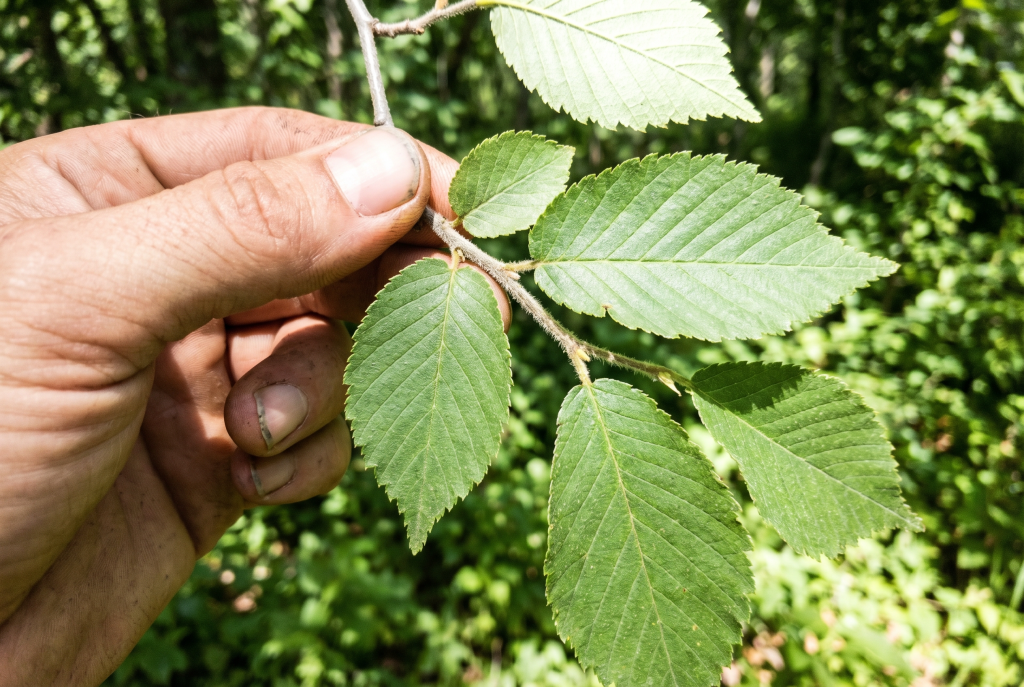
- Buds: Dark brown to black, covered with rusty-orange hairs, a key winter identification marker.
- Twigs: Slightly hairy, not smooth.
- Seeds (samaras): Round, papery, with a notched wing. No hair on the seed’s wing margin (distinguishing it from American elm).
Critical note: Don’t confuse Ulmus rubra with the American elm (Ulmus americana) or Siberian elm (Ulmus pumila). While those aren’t toxic, they don’t carry the same medicinal mucilage. Learn to identify the real thing before you harvest.
Pro Tip: If you’re building your plant identification skills from scratch, a resource like the Lost Frontier Handbook is an invaluable reference. It covers edible and medicinal plants used by early American settlers with the kind of practical, field-ready detail that survival and homesteading readers need.
The Science of Slippery Elm: Why This Bark Actually Works
Here’s the thing that separates slippery elm from folk mythology: the mechanism is real, it’s measurable, and modern researchers have confirmed what Native healers figured out centuries ago.
The Mucilage Mechanism
The inner bark of slippery elm is packed with complex polysaccharides — long-chain carbohydrate molecules that, when they come into contact with water, swell and form a thick, viscous gel. This substance is called mucilage, and it’s the core of slippery elm’s healing power.
When you ingest slippery elm gruel, this mucilage:
- Coats the mucosal lining of the esophagus, stomach, and intestines, creating a physical barrier between irritated tissue and digestive acids or irritants.
- Reduces inflammation by interacting with nerve endings in the digestive lining, triggering a reflex that increases mucous secretion throughout the GI tract.
- Provides gentle nutrition. The polysaccharides are partially digestible and serve as a mild prebiotic, supporting healthy gut flora.
- Draws out impurities, acting somewhat like a gentle poultice internally, absorbing and neutralizing some irritants.
The result is a cascade of soothing effects that work from the top of your digestive system to the bottom.
What Modern Research Says
The research isn’t voluminous, it’s hard to get Big Pharma funding for a tree but what exists is compelling:
- A 2002 study published in the Journal of Alternative and Complementary Medicine found slippery elm to be one of several botanicals that significantly reduced gastrointestinal symptoms in IBS patients.
- A 2010 study in Alimentary Pharmacology & Therapeutics examined a multi-herb formula including slippery elm and found meaningful improvement in bowel function and abdominal discomfort.
- Research confirms that the mucilage’s demulcent properties mechanically protect and soothe irritated tissue, a validated explanation for its centuries of use.
This is a plant with 200+ years of documented clinical use and modern scientific support. That’s a combination worth paying attention to.
A Brief History: From Native Wisdom to the American Frontier

Long before European settlers arrived, the Iroquois, Mohegan, Cherokee, and other Native nations had catalogued the slippery elm’s properties in elaborate detail. They used the inner bark not only for digestive ailments but for:
- Treating wounds and burns (as a poultice)
- Soothing sore throats
- Easing coughs and bronchitis
- Providing emergency nutrition during lean times (the thick gruel is genuinely caloric)
- Assisting difficult labors
When European settlers moved west, Native healers shared this knowledge freely, often at great cost and rarely with proper acknowledgment. These were medical traditions refined over thousands of years of empirical observation, and they worked.
By the 1800s, slippery elm had become a staple in the American frontier medicine chest. Physicians of the era prescribed it for dysentery, typhoid fever, urinary tract inflammation, and wounds. It appeared in the U.S. Pharmacopeia from 1820 to 1960 — a designation that meant it was officially recognized as a legitimate medicine by the American medical establishment.
It was only the rise of pharmaceutical manufacturing (and the profit motive attached to it) that gradually pushed slippery elm out of mainstream clinical practice. But in the homesteading and preparedness communities, knowledge like this never fully dies.
What Conditions Slippery Elm Can Help
Let’s be specific. Slippery elm is not a cure-all, but it has well-documented applications for a range of conditions that are both common and potentially serious, especially in a grid-down or limited-access healthcare scenario.
Gastrointestinal Conditions
- Acid Reflux / GERD: The mucilage coats the esophageal lining, providing relief from the burning sensation caused by acid backwash. Unlike antacids, it doesn’t disrupt stomach pH.
- IBS (Irritable Bowel Syndrome): Particularly effective for IBS-D (diarrhea-predominant), as the mucilage helps firm loose stools and reduce intestinal cramping.
- Crohn’s Disease and Ulcerative Colitis: While not a replacement for medical treatment of these serious conditions, slippery elm can provide meaningful symptomatic relief and may help protect inflamed intestinal tissue during flare-ups.
- Gastritis: Soothes the stomach lining when it’s inflamed from food, stress, or Helicobacter pylori.
- Constipation: The bulk-forming properties of the mucilage can help with constipation as well as diarrhea, it normalizes rather than just treating one end of the spectrum.
- Diverticulitis: Can help soothe irritated diverticular pockets during a flare.
Throat and Respiratory Conditions
- Sore throat and laryngitis: The same mechanism works throughout the throat. Slippery elm lozenges were a staple throat remedy through the 19th and early 20th centuries.
- Cough: Coats and soothes irritated airways, particularly for a dry, persistent cough.
- Bronchitis: Used as an expectorant and soothing agent for the bronchial lining.
External Applications
- Wounds, burns, boils, and abscesses: The powdered bark mixed with water into a paste functions as a drawing poultice, pulling out impurities while keeping the wound moist and protected.
- Skin inflammation and rashes: Can be applied topically for eczema or psoriasis flares.
How to Harvest and Prepare Slippery Elm
This is the section most “herbal” guides skip over or gloss. Let’s do it right.
Ethical and Legal Harvesting
First, a critical point: Never strip bark from the trunk of a living slippery elm tree. Circumferential bark removal kills the tree. Slippery elm is already listed as a species of concern in several states due to Dutch elm disease and overharvesting.
The right way to harvest:
- Use fallen branches or storm-damaged limbs. The inner bark on recently fallen branches (within a few hours to a day of falling) is still medicinally viable.
- Harvest from branches being pruned, taking only the inner bark.
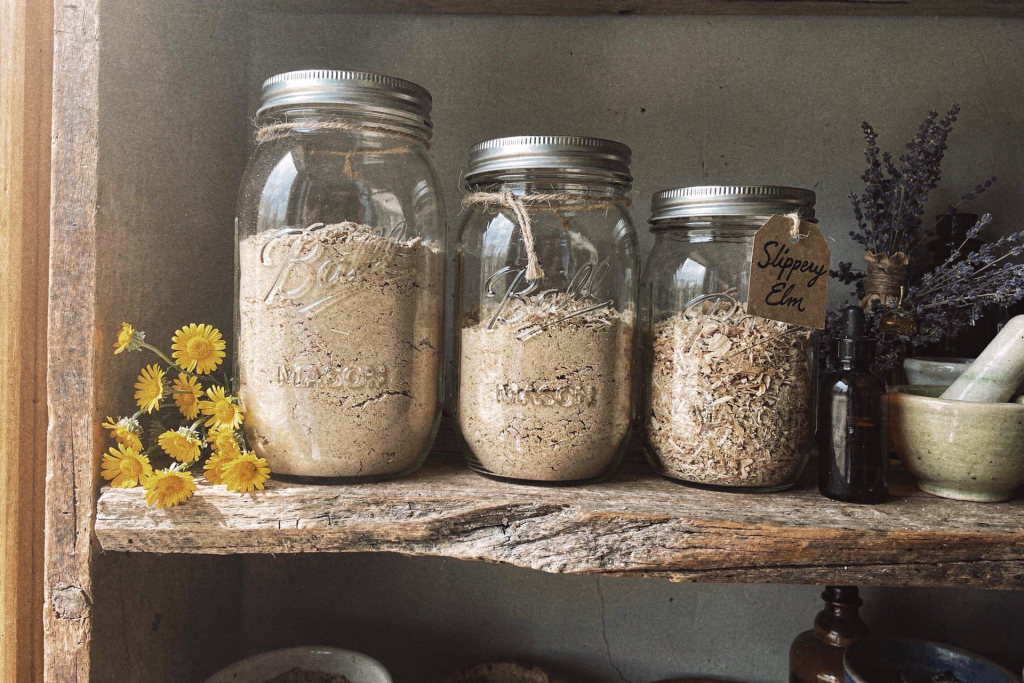
- Purchase ethically sourced powdered inner bark from reputable herbal suppliers. For preparedness purposes, this is often the most practical option and the quality is consistent.
Identifying the Inner Bark
When you slice through the outer bark, the inner bark (cambium layer) is the reddish-brown layer just beneath. When you scratch it with your fingernail or chew on a small piece, it will become distinctly mucilaginous, slippery, gel-like. That viscosity is your confirmation.
Processing and Storage
- Fresh bark: Peel and use immediately, or dry it in thin strips in a warm, ventilated area (or dehydrator at low temperature, under 100°F) for 1–2 weeks.
- Dried bark: Can be ground in a coffee or spice grinder to produce your own powder. Sift to remove any hard fibrous pieces.
- Storage: Store powdered bark in an airtight glass jar in a cool, dark location. Properly dried and stored, it retains potency for 2–3 years.
How to Use Slippery Elm: Dosing and Preparation Methods
Method 1: The Traditional Gruel (Most Effective for Digestive Issues)
This is the method with the longest documented history and the strongest evidence base.

What you need:
- 1 tablespoon powdered slippery elm inner bark
- 1–2 cups warm (not boiling) water
- Optional: raw honey, cinnamon, or a pinch of cardamom for palatability
Instructions:
- Add the powder to a cup or bowl.
- Slowly add warm water while stirring constantly to prevent clumping.
- Continue stirring until the mixture thickens into a smooth, porridge-like consistency (2–3 minutes).
- Add optional flavorings as desired.
- Consume slowly.
Dosage: 1–3 times daily as needed. Take on an empty stomach or between meals for best results in GI conditions.
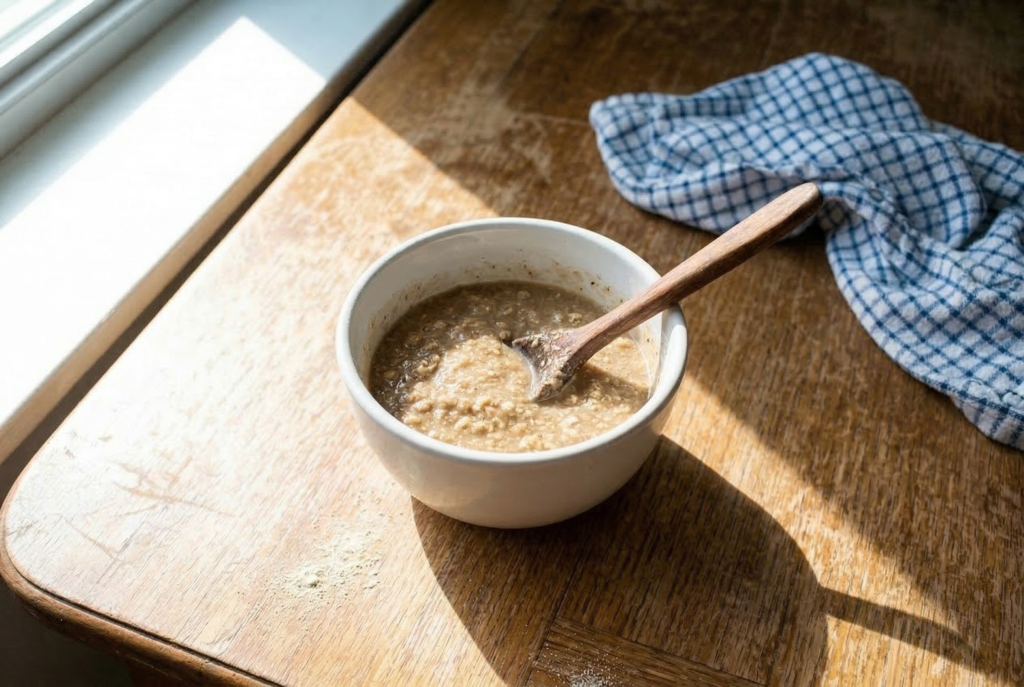
Consistency: The mixture should be thick enough that a spoon briefly holds its impression. Too watery and you lose the full coating effect.
Method 2: Cold Infusion (Gentler, Easier to Drink)
- Mix 1 teaspoon of powder with a small amount of cold water to form a paste.
- Slowly add 8 oz of cold water while stirring.
- Allow to sit for 5–10 minutes, stirring occasionally.
- Drink slowly.
This method produces a thinner, more drinkable consistency suitable for throat conditions or when someone is too unwell to eat.
Method 3: Poultice for Wounds and Skin
- Mix powdered bark with enough warm water to form a thick paste.
- Apply directly to the affected area.
- Cover with a clean cloth.
- Replace every 4–6 hours.
Method 4: Slippery Elm Tea (Mild, for Maintenance)

Simmer 1–2 teaspoons of bark chips (not powder) in 2 cups of water for 20 minutes. Strain and drink. This produces a milder concentration suitable for daily maintenance use.
Method 5: Lozenges (for Throat Conditions)
Mix powdered slippery elm with a small amount of raw honey and a drop of peppermint essential oil until you can form small balls. Roll in more powder, let dry. These are functional throat lozenges with a solid historical pedigree.
Pros, Cons, and Considerations
No responsible preparedness guide gives you only one side of the coin.
Advantages
- Extremely safe: No known toxicity at therapeutic doses. Safe for children, pregnant women (in food amounts), and the elderly.
- Dual action: Works for both constipation and diarrhea (normalizing effect rather than pushing one direction.)
- Nutritive: Unlike pharmaceutical treatments, slippery elm gruel provides actual calories and mild nutrition, useful when someone is too ill to eat.
- Non-habit-forming: No dependency risk.
- Long shelf life: Properly dried powder stores for years.
- Affordable: Even commercial slippery elm powder is relatively inexpensive.
- Evidence-backed: Not just folk medicine, it has real research support.
Limitations and Cautions
- Drug absorption: Because of the coating effect, slippery elm can potentially slow the absorption of prescription medications. Always take medications at least 1–2 hours apart from slippery elm.
- Not a substitute for emergency care: Severe GI bleeding, bowel obstruction, appendicitis, and similar acute conditions require medical attention. Slippery elm is a supportive tool, not a replacement for diagnosis and emergency treatment.
- Allergy considerations: Rare, but some individuals (particularly those with elm tree pollen allergies) may react. Start with a small amount.
- Quality matters: Commercial powders vary. Buy from reputable suppliers with clear sourcing.
Building Your Preparedness Herbal Kit Around Slippery Elm
Slippery elm doesn’t exist in isolation. A well-stocked preparedness herbal kit builds around a core of plants with overlapping, complementary functions. Think of it as redundancy, the same principle you apply to water storage, food supply, and communications.
Plants that work synergistically with slippery elm for GI health include:
- Marshmallow root (Althaea officinalis) — another powerful mucilaginous herb, excellent for urinary tract and upper GI issues
- Licorice root (Glycyrrhiza glabra) — anti-inflammatory and soothing, particularly for gastritis (use DGL form if you have blood pressure concerns)
- Ginger (Zingiber officinale) — antiemetic, anti-inflammatory, warming
- Chamomile (Matricaria chamomilla) — antispasmodic, anti-inflammatory, calming for gut spasms
- Activated charcoal — for acute poisoning and food-borne illness situations
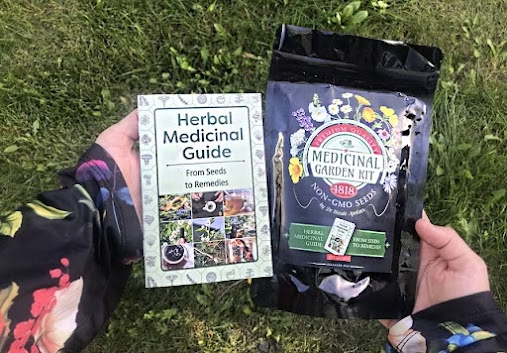
If you’re serious about building this knowledge base from the ground up, including plant identification, preparation methods, and appropriate use, the Medicinal Garden Kit is one of the most comprehensive resources available for homesteaders and preppers. It includes both the seeds to grow key medicinal plants and a detailed guidebook covering traditional and evidence-based uses — exactly the kind of hands-on, practical resource this community deserves.
From the Archives: What the Pioneers Knew That We Forgot
There’s a humbling truth in all of this. The people who settled the American frontier (often hundreds of miles from the nearest doctor, surviving winters that would test modern people to their breaking point) did not have access to modern medicine. They had knowledge.
They knew which trees to peel and when. They knew which mushrooms healed versus harmed. They knew how to set bones, reduce fevers, treat infections with what the forest provided, and keep children alive through cholera outbreaks using remedies that worked not because someone believed in them, but because generations of trial and error had refined them into something reliably effective.
That knowledge is not extinct. But it is endangered, fragmented, scattered across old texts, living in the memories of a dwindling number of practitioners. Part of what makes the preparedness community valuable is that it actively preserves and transmits this kind of practical wisdom.
If you want to go deeper into the full scope of what our ancestors knew ( from food preservation to medicinal plants to self-sufficient living ) the Lost Frontier Handbook is one of the most thorough modern compilations of that frontier knowledge available. It’s the kind of book you read once, then keep close.
Practical Summary: Slippery Elm at a Glance
| Attribute | Detail |
|---|---|
| Plant | Slippery elm (Ulmus rubra) |
| Part Used | Inner bark (cambium layer) |
| Active Compound | Mucilaginous polysaccharides |
| Primary Use | Digestive tract soothing and healing |
| Conditions | GERD, IBS, Crohn’s, gastritis, sore throat, wounds |
| Standard Dose | 1 tbsp powder in warm water, 1–3x/day |
| Safety Profile | Excellent — safe for most populations |
| Shelf Life | 2–3 years (dried, stored properly) |
| Historical Use | U.S. Pharmacopeia 1820–1960 |
| Ethical Harvest | Fallen branches only; do not ring living trees |
Conclusion: A Tree Worth Knowing
Slippery elm is not exotic, not rare, not difficult to use. It grows across millions of acres of American forest. It has been used medicinally for longer than the United States has existed. Its mechanism is understood, its safety record is impeccable, and its applications are genuinely useful in everyday life and in preparedness scenarios.
What it requires is knowledge — and that’s exactly what separates the prepared from the unprepared.
Add slippery elm to your homestead apothecary. Learn to identify the tree in your region. Stock quality powdered bark in your medical supplies. Practice making the gruel so the preparation is second nature before you need it under stress.
The pioneers didn’t need a pharmacy. Neither do you, as long as you know what they knew.
Have you used slippery elm or other traditional herbal remedies in your homesteading or preparedness practice? Share your experience in the comments below, this community learns best from people with real field experience.
And if you’re ready to take your plant medicine knowledge to the next level, don’t miss the Medicinal Garden Kit — seeds, a comprehensive guidebook, and the foundation of a true self-reliant apothecary, all in one place.