
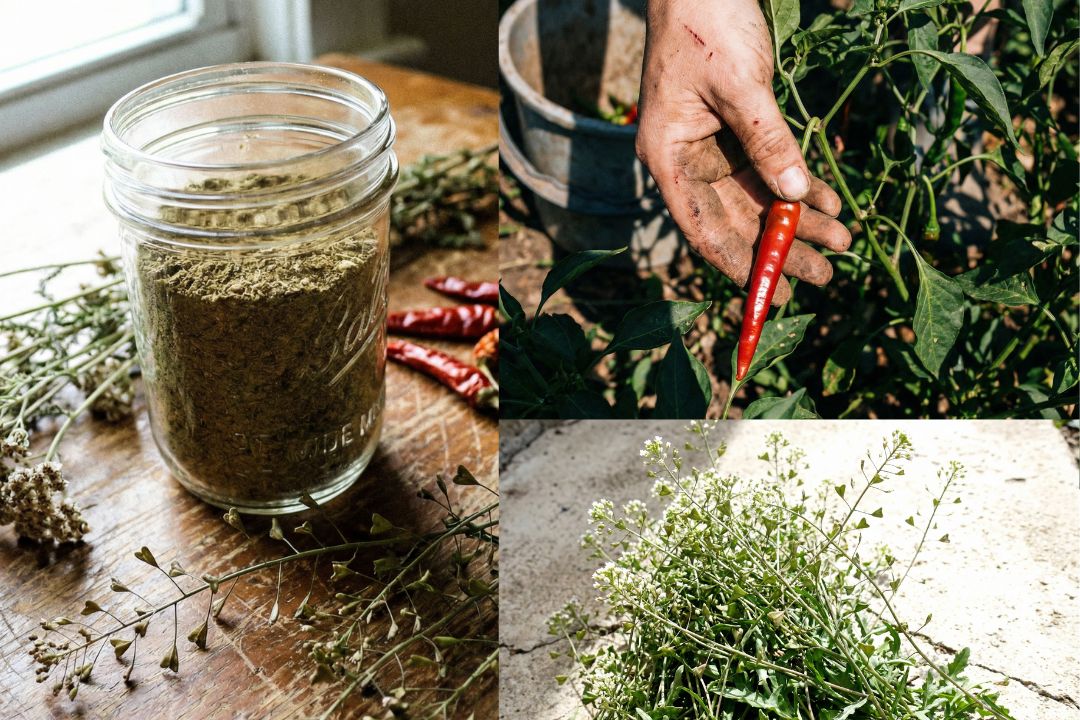
How to Make Hemostatic Powder That Stops Bleeding in Under a Minute
When you’re miles from the nearest hospital and blood is flowing from a wound, every second counts. Your ancestors knew this better than anyone. They couldn’t call 911 or drive to the emergency room, so they developed something remarkable: a hemostatic powder made from three common plants that could stop bleeding faster than most modern first-aid supplies.
This isn’t folklore. This is the same blend battlefield surgeons used during the Civil War, the remedy frontier doctors kept in their bags, and the emergency treatment your great-grandmother probably had in a jar on her kitchen shelf. The recipe was simple enough that anyone could make it, yet powerful enough that it saved countless lives when professional medical care simply wasn’t available.
What makes this particularly relevant now? These three plants (yarrow, cayenne pepper, and shepherd’s purse) grow in backyards and wild spaces across North America. The knowledge to transform them into a life-saving powder takes less than an afternoon. And the results speak for themselves: when applied directly to wounds, this powder can halt bleeding in under a minute.
Why This Powder Works: The Science Behind the Blend
Each plant in this hemostatic blend brings specific, scientifically validated properties that work together to stop bleeding and promote healing.
Yarrow: The Blood Vessel Constrictor
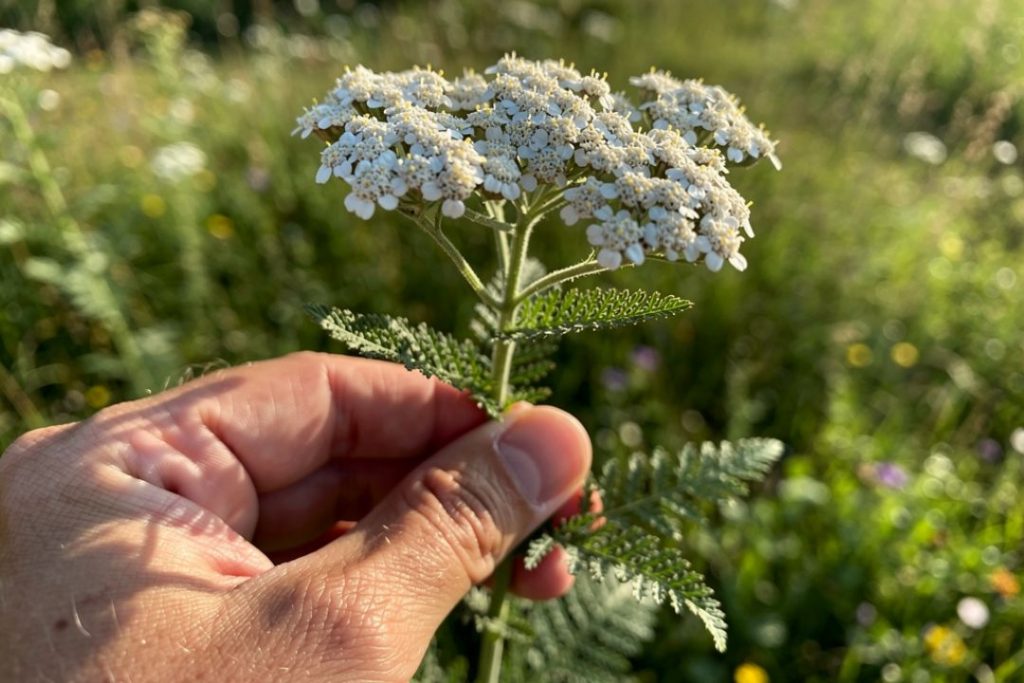
Yarrow (Achillea millefolium) earned its scientific name from Achilles, the Greek warrior who reportedly used it to treat his soldiers’ wounds. The plant contains achillein, a compound that causes blood vessels to constrict rapidly. When blood vessels narrow, less blood flows through them. Yarrow also contains flavonoids and alkaloids that enhance the blood’s natural clotting cascade, essentially accelerating your body’s own hemostatic response.
Cayenne Pepper: The Clotting Catalyst
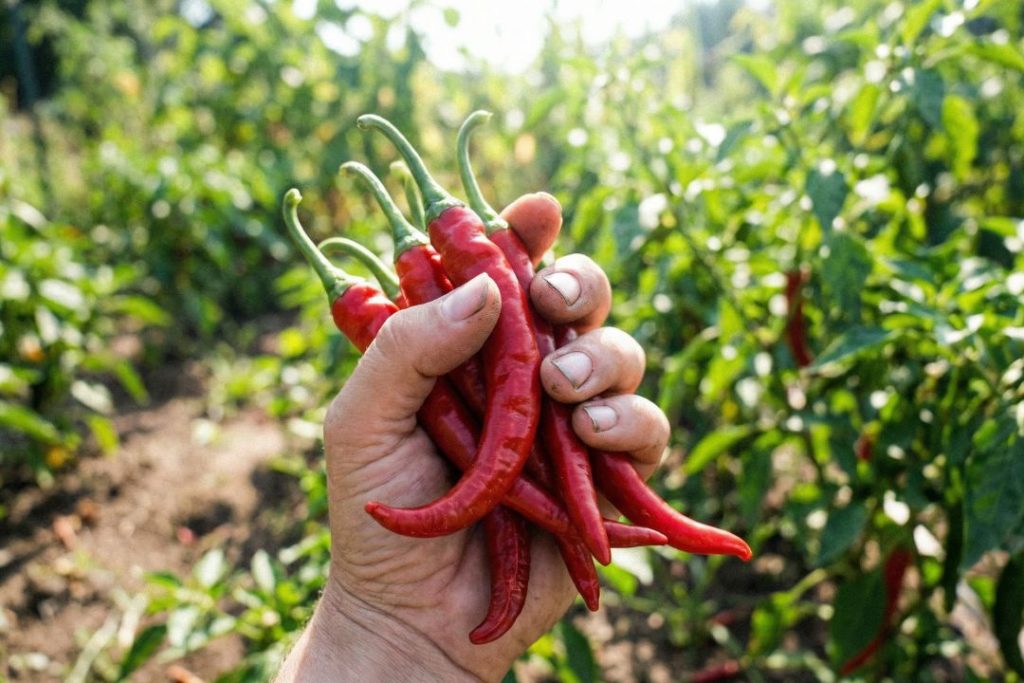
This might sound counterintuitive, but cayenne pepper (Capsicum annuum) is one of the most powerful natural hemostatic agents available. The capsaicin in cayenne doesn’t thin blood; it actually regulates blood pressure and stimulates the body’s clotting mechanisms. When cayenne contacts a wound, it causes an immediate equalization of blood pressure, preventing the rush of blood to the injury site that can wash away forming clots. Simultaneously, it triggers platelet aggregation, the clustering of blood cells that forms the foundation of every clot.
Shepherd’s Purse: The Ancient Wound Healer
Shepherd’s purse (Capsella bursa-pastoris) has been used to stop bleeding for over 2,000 years. This humble “weed” contains compounds that constrict blood vessels and promote rapid clotting. It’s been so effective historically that it was used as a substitute for ergot in controlling postpartum hemorrhage. The plant is rich in vitamin K, which plays a crucial role in blood clotting, along with flavonoids that strengthen capillary walls and reduce bleeding.
The synergy of these three plants is what makes this blend so effective. Yarrow constricts vessels and promotes clotting. Cayenne equalizes blood pressure and triggers platelet aggregation. Shepherd’s purse adds additional hemostatic compounds and strengthens blood vessels. Each plant amplifies the effects of the others, creating a hemostatic response greater than any single plant could achieve alone.
If you’re serious about medical self-reliance, The Home Doctor: Practical Medicine for Every Household compiles the ingenious methods doctors in Venezuela developed when hospitals ran out of medicine and supplies, practical techniques you can use when help isn’t on the way.
Identifying and Sourcing Your Herbs
Yarrow (Achillea millefolium)
Yarrow grows as a common “weed” across North America. Look for feathery, fern-like leaves that are finely divided, flat-topped clusters of tiny white or pink flowers, and a strong aromatic scent when crushed. It grows 1-3 feet tall in disturbed areas, roadsides, and meadows, blooming June through September. Harvest the aerial parts (leaves and flowers) when in full bloom.
Avoid look-alikes: Yarrow has some dangerous look-alikes, particularly poison hemlock. Key difference: yarrow has a pleasant aromatic smell while hemlock smells musty and unpleasant.
Cayenne Pepper (Capsicum annuum)
Most people will source cayenne from their spice cabinet or purchase it. For medicinal purposes, you want pure organic cayenne pepper powder with a heat rating of 40,000-50,000 Scoville units, bright red color indicating freshness, and no additives or anti-caking agents.
Shepherd’s Purse (Capsella bursa-pastoris)
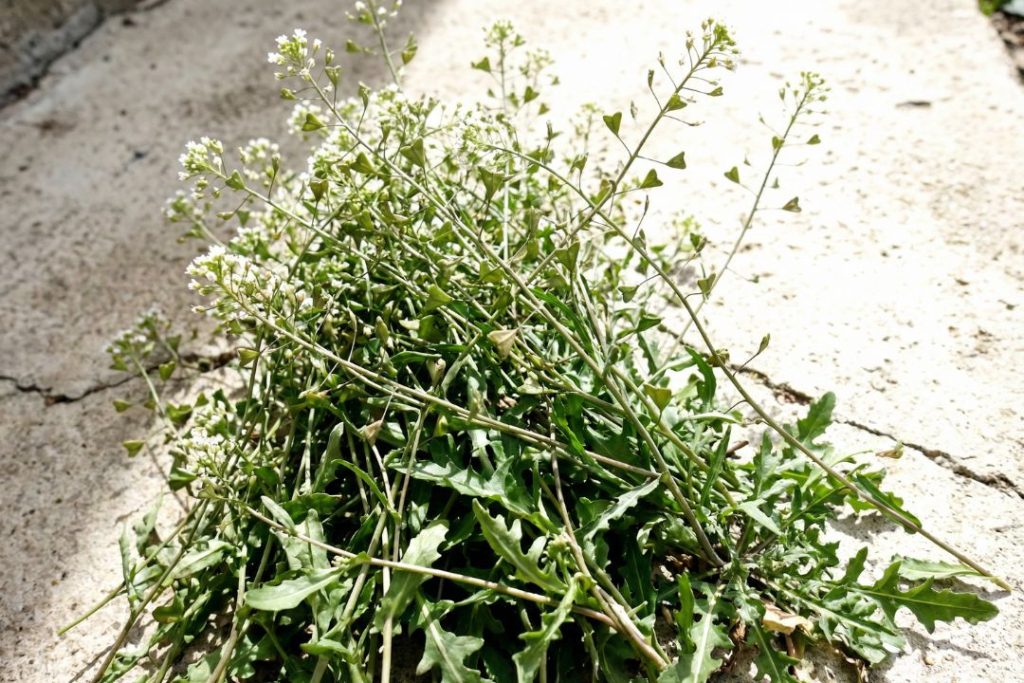
Shepherd’s purse is one of the most common “weeds” you’ll find, and it’s an incredibly powerful hemostatic herb. Look for:
Identification:
- Small heart-shaped or triangular seed pods (resembling old-fashioned purses, hence the name)
- Small white flowers with four petals
- Rosette of lobed leaves at the base
- Grows 6-18 inches tall
- Found in gardens, fields, roadsides, and disturbed areas
- Blooms March through November in most regions
Harvesting: Harvest the entire aerial plant (leaves, stems, flowers, and seed pods) when in flower or early seed production. This is when the hemostatic compounds are most concentrated. Cut the plant at ground level. It’s best used fresh but dries well for storage.
Important: Shepherd’s purse is safe for external wound use and has an excellent safety profile with no known toxicity issues.
You can either wildcraft these herbs yourself or purchase them from reputable suppliers. For emergency preparedness, keep dried herbs on hand even if you wildcraft, so you’re not dependent on seasonal availability.
Making Hemostatic Powder: Step-by-Step
Creating effective hemostatic powder requires thorough drying, proper grinding, and careful blending.
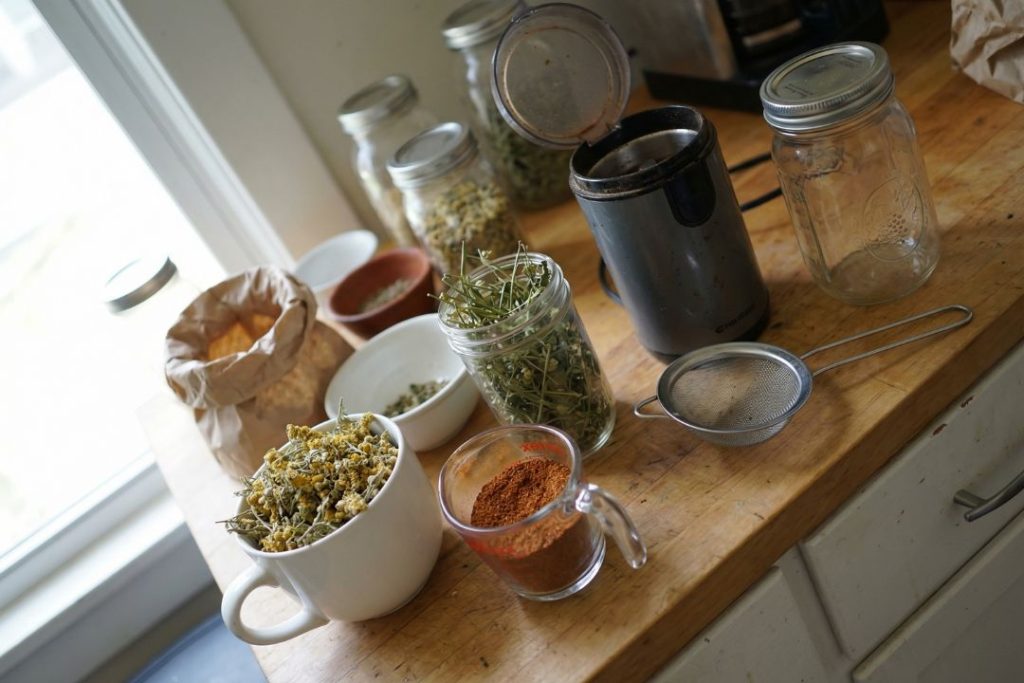
What You’ll Need:
- 1 cup dried yarrow (leaves and flowers)
- 1/4 cup dried cayenne pepper
- 1/2 cup dried shepherd’s purse (aerial parts)
- Coffee grinder or high-powered blender
- Fine mesh strainer
- Clean, dry glass jars with tight-fitting lids
- Desiccant packets (optional but recommended)
The Process:
Step 1: Dry Your Herbs Completely
This is critical. Moisture compromises storage and effectiveness. Every plant must be bone-dry before grinding, typically 3-7 days depending on humidity.
For yarrow, spread in a single layer on drying racks. It’s ready when stems snap cleanly and leaves crumble easily. In a dehydrator, use 95-105°F for 12-24 hours.
For shepherd’s purse, spread the entire aerial plant on drying racks. It dries quickly, usually 2-4 days at room temperature or 8-12 hours in a dehydrator at 95-105°F. It’s ready when the stems snap cleanly and the seed pods are crispy.
Step 2: Grind to Fine Powder
Use a dedicated coffee grinder (not one you use for coffee) to grind each herb separately until it reaches a flour-like consistency. Grind in small batches, pulsing rather than running continuously. After grinding, sift each powder through a fine mesh strainer to remove larger particles.
Step 3: Blend the Formula
Standard ratio:
- 2 parts yarrow powder
- 1 part shepherd’s purse powder
- 1/2 part cayenne powder
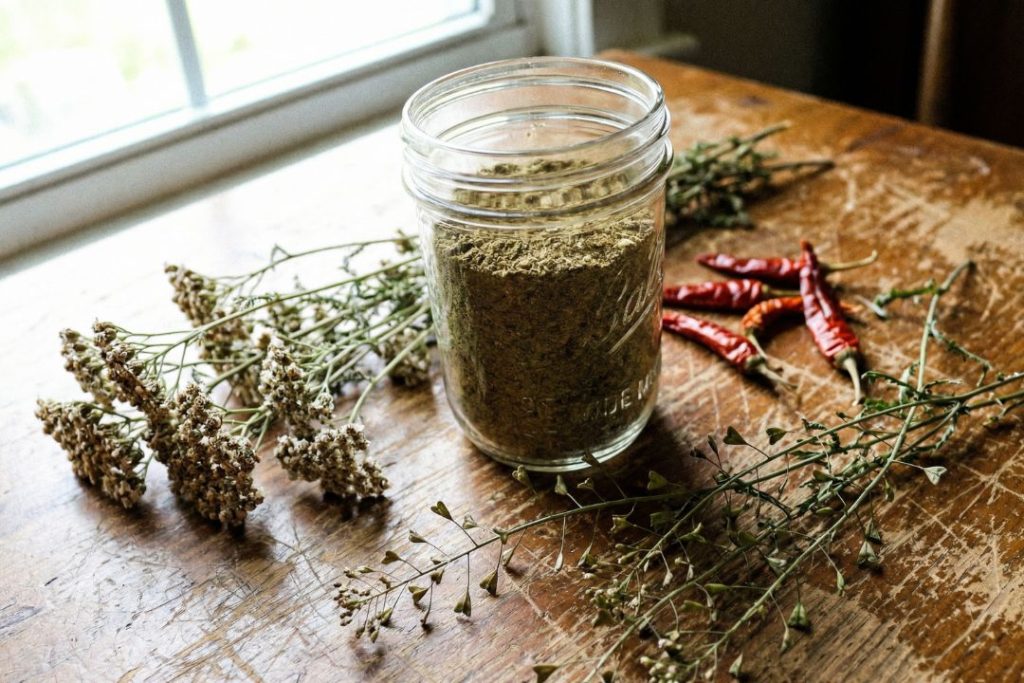
Mix thoroughly in a bowl using a whisk, ensuring complete integration. The color should be a reddish-tan from the cayenne blended with the green herbs.
Step 4: Package and Store
Transfer finished powder into clean, completely dry glass jars. Dark amber glass is ideal. Add a desiccant packet to each jar. Label clearly with contents, date, and “External Use Only.”
For emergency kits, create individual-use packets with 1-2 tablespoons of powder in small zipper bags.
Storage: When properly stored in airtight containers away from heat, light, and moisture, hemostatic powder remains effective for 2-3 years.
How to Use Hemostatic Powder in Emergencies
For Active Bleeding (Minor to Moderate)
- Apply direct pressure using clean cloth or gauze for 30-60 seconds while you prepare the powder.
- Pour powder generously directly into the wound. Use enough to completely fill and cover the wound, for a 2-inch laceration, use 1-2 tablespoons.
- Apply firm pressure over the powdered wound using clean gauze. Hold constant pressure for 60-90 seconds without peeking.
- Check for bleeding control. After 90 seconds, carefully lift the gauze. If bleeding has stopped or reduced to minimal oozing, proceed to bandaging. If still bleeding actively, add more powder and apply pressure for another 60-90 seconds.
- Bandage securely once bleeding is controlled.
Expected Timeline: Most wounds stop bleeding within 60-90 seconds of powder application.
For Severe Bleeding
Call emergency services immediately if possible. For deep wounds, pack the wound by pouring powder into it, then use gauze to pack it tightly, adding more powder as you go. Apply maximum direct pressure with both hands if needed. Maintain pressure continuously for at least 3-5 minutes.
After Initial Bleeding Control
Once you’ve stopped the bleeding, proper wound care becomes essential. Clean the wound thoroughly by removing the hemostatic powder through irrigation with clean water. Deep wounds, wounds with embedded material, or injuries involving tendons or nerves need medical evaluation. You can apply pine pitch salve or honey for antimicrobial protection after cleaning.
Hemostatic powder works excellently for wound care, but plantain leaf is another powerful drawing agent that grows as a common ‘weed’, our grandparents knew it as ‘nature’s band-aid’ for cuts, stings, and infections.
What Hemostatic Powder Cannot Do
- Internal bleeding you can’t access
- Massive trauma with multiple injuries
- Severe arterial spurting (may require tourniquet)
- Infection prevention (it’s not a substitute for proper wound cleaning)
Advanced Formulations and Uses
Enhanced Antimicrobial Version
For dirty wounds or high infection risk, add 1/4 part goldenseal root powder or Oregon grape root powder to your standard formula. Both contain berberine, a potent natural antibacterial compound.
For Chest Congestion
Rub the salve on the chest and upper back. The volatile terpenes in the herbs help clear respiratory passages. For internal respiratory support, combine with mullein tea, the pioneer remedy for coughs and lung infections.
Other Applications
- Nosebleeds: Insert a small pinch (1/4 teaspoon) into the bleeding nostril
- Dental emergencies: Apply directly to bleeding tooth socket
- Joint pain: Massage into sore areas for warming, anti-inflammatory effect
- Minor burns: The protective properties soothe and seal
Building Comprehensive Medical Preparedness
Hemostatic powder handles traumatic bleeding beautifully, but that’s just one category of emergency. What about when someone shows cardiac symptoms? Or needs wound closure? Or develops an infection when antibiotics aren’t available?
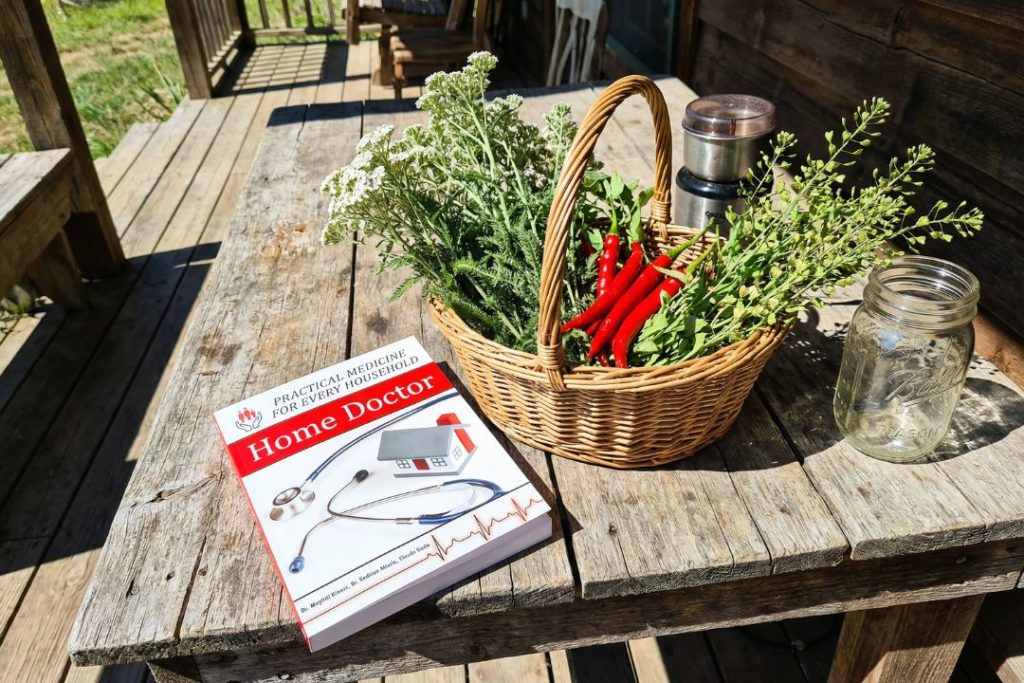
Having hemostatic powder in your medical kit is a solid start, but true medical preparedness means knowing how to handle everything from recognizing heart attack symptoms to managing wounds when professional help isn’t available. The Home Doctor: Practical Medicine for Every Household provides exactly that foundation. Written by a doctor who developed these techniques working in Venezuelan hospitals that lost power and supplies, it shows you how to handle most medical situations when professional help isn’t accessible.
When you know how to close wounds using emergency butterfly closures, stop bleeding with hemostatic powder, and treat infections with traditional remedies, you’ve built something powerful: genuine medical self-reliance.
Safety and Legal Considerations
Legal Status: Herbal preparations for personal use are generally legal. You can wildcraft herbs from public land (following local regulations), grow medicinal plants, and make preparations for yourself and family. You cannot legally sell preparations without proper licensing or practice medicine without a license.
Safety Considerations:
- Some people are allergic to plants in the Asteraceae family (includes yarrow)
- Test a small amount on intact skin before using any new herbal preparation
- Improperly dried or stored herbs can harbor mold or bacteria
- Hemostatic powder is first aid, not medical treatment
When NOT to Use:
- Deep puncture wounds (may trap infection)
- Wounds requiring stitches before cleaning
- Eye injuries
- Known allergy to any ingredient
Medical Disclaimer: This article provides educational information based on historical use and traditional herbal knowledge. It is not medical advice. Always seek professional medical care when available. Hemostatic powder is an emergency measure to control bleeding until proper medical attention can be obtained.
Your Next Steps
You now possess the complete formula for making battlefield-grade hemostatic powder. But knowledge sitting in your head isn’t the same as capability you can deploy in an emergency.
This Week:
Identify or source your herbs. Walk your property looking for yarrow, check local herb suppliers, or order online. Make your first batch following the instructions. Test it on minor kitchen cuts or scrapes to familiarize yourself with how it works.
This Month:
Build your reserves. Make enough to stock multiple locations: home first-aid kit, vehicle, workshop, bug-out bag. Train your family, show them where the powder is and how to use it. In emergencies, you might not be the one who needs to apply it.
This Year:
Master related skills beyond hemostatic powder. Learn wound cleaning, bandaging, pressure points, and tourniquet application. Develop comprehensive medical knowledge, single techniques aren’t enough. The Home Doctor provides that foundation with practical techniques for real emergencies developed by doctors working without modern infrastructure.
Conclusion: Reclaiming Lost Knowledge
Making hemostatic powder isn’t just about stopping bleeding. It’s about reclaiming medical capability that was once common knowledge but has been largely lost. It’s about refusing to be completely dependent on systems you can’t control.
Your great-grandparents would have considered the ability to make basic medicine from available plants essential life knowledge. Somewhere along the way, we outsourced that knowledge to specialists and supply chains. We gained convenience but lost capability.
This formula has saved lives on battlefields and in frontier cabins, in medieval hospitals and during civil wars. It works. It’s worked for centuries. And now you know how to make it.
The knowledge is preserved. The recipe is proven. The capability is within reach. Now it’s up to you.
Have you made hemostatic powder or used traditional wound remedies? Share your experiences in the comments below, your story might be exactly what someone else needs to hear to take that first step toward medical preparedness.